

The Mirror Suite
Leadership doesn't improve because people know more.
It improves because they understand themselves, and the consequences of their behaviours, more deeply.
The Mirror Suite is Eponathelia's signature leadership development programme, designed to help leaders develop the awareness that underpins every decision, every conversation and every relationship.
Built around the Eponathelia Reflection Pathway™ — Pause. Observe. Reflect. Challenge. Act. — each workshop creates the space for participants to examine the assumptions, habits and behaviours that influence the way they lead.
The Mirror Suite doesn't tell leaders what to think. It doesn't give them answers.
Instead, it creates the space for them to notice how they think, how they behave and how others may experience their leadership.
Rather than providing quick answers or one-size-fits-all solutions, The Mirror Suite encourages leaders to expand their thinking, consider different perspectives and lead with greater authenticity, purpose and intention.
Through practical discussion, structured reflection and experiential learning, participants strengthen their ability to build trust, communicate with clarity, create psychological safety and lead others through change.
Each participant receives an Eponathelia Leadership Reflection Journal, providing a dedicated space to continue observing their behaviours, exploring their experiences and challenging assumptions long after the workshop has finished.
Structured follow-up reflections at 30 and 90 days encourage participants to revisit their learning, consider how their awareness and behaviours have developed, and identify opportunities for continued growth.
Because lasting leadership doesn't begin with knowing more.
It begins with seeing more clearly.
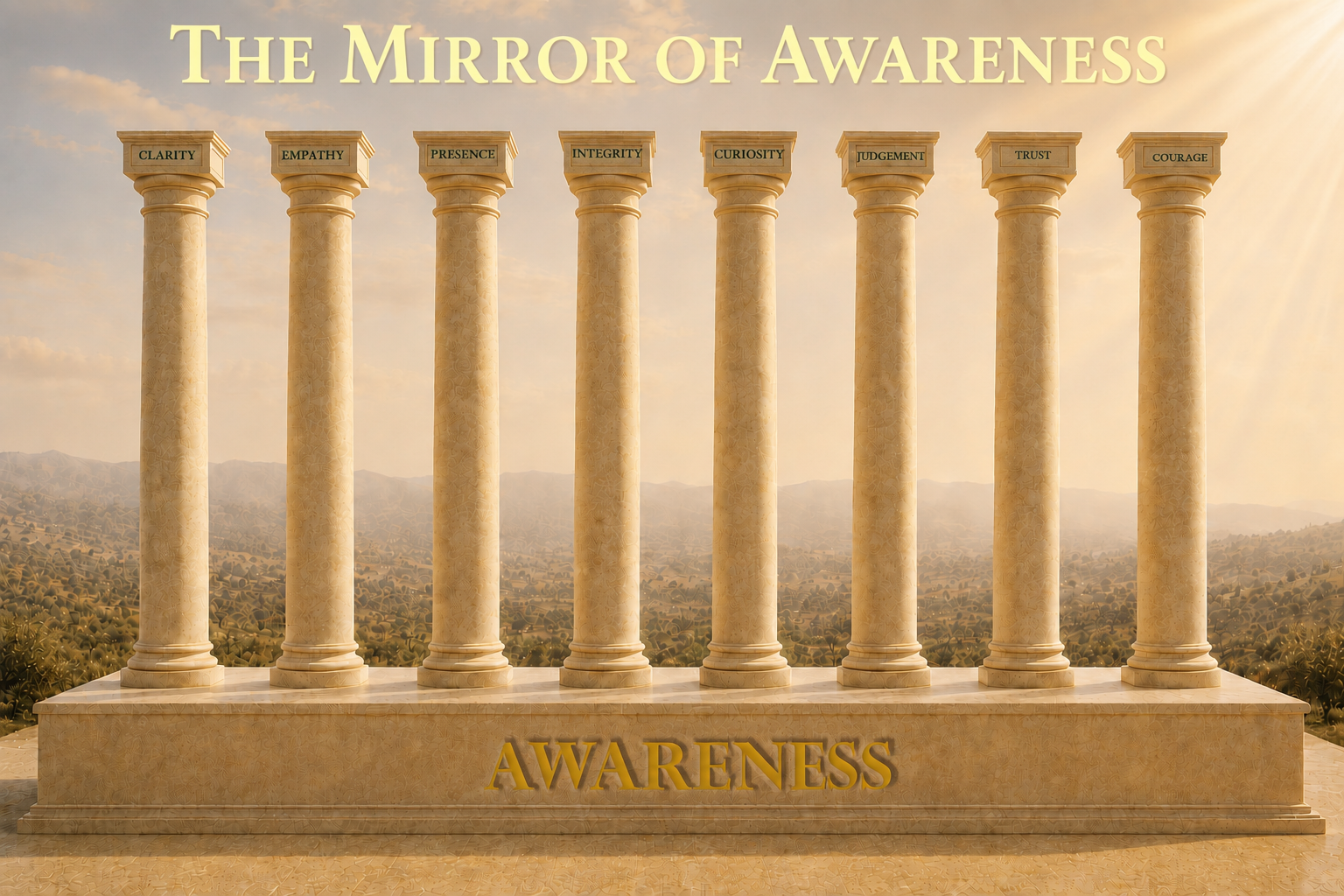
The Mirror of Awareness
Every leadership decision begins with awareness.
Effective communication, trust, psychological safety and change all begin with intentional awareness: understanding ourselves, recognising the assumptions we make and appreciating the impact our behaviour may have on others.
The Mirror of Awareness develops the self-awareness that underpins effective leadership. Through thought-provoking discussion, practical activities and memorable visual metaphors, participants explore how pausing before reacting, challenging assumptions and recognising bias can support more considered decisions.
Organisations benefit from leaders who consider different perspectives, communicate with greater intention and respond thoughtfully rather than react instinctively — creating stronger relationships, better judgement and more consistent leadership across every level of the organisation.

The Mirror of Communication
Every conversation shapes culture.
Communication is far more than the words we choose. It influences understanding, trust, engagement, performance and the quality of every relationship within an organisation.
The Mirror of Communication explores how messages are created, interpreted and experienced. Participants consider not only the words they use, but how they deliver them, what their non-verbal behaviour can convey and what happens when their actions communicate something different from their words.
They explore how they listen, question and give feedback, while considering the assumptions and hidden barriers that can prevent genuine understanding.
This can lead to clearer communication, stronger collaboration and fewer misunderstandings. Teams become better equipped to resolve conflict, build meaningful relationships and create environments where people feel heard, understood and valued.

The Mirror of Trust
Trust is earned through everyday actions.
Trust isn't created through grand gestures. It develops through consistency, integrity and the countless small decisions and interactions that shape how people experience our leadership.
The Mirror of Trust examines how trust is created, strengthened and, when necessary, rebuilt. Participants explore the behaviours that reinforce confidence, encourage openness and contribute to dependable working relationships. They consider how consistency between what they say and what they do can strengthen trust — and what can happen when their words and actions don't align.
As trust grows, collaboration, accountability and a willingness to contribute become more achievable. Teams are better able to work together, approach difficult conversations with greater openness and create environments where people feel confident to fully contribute.
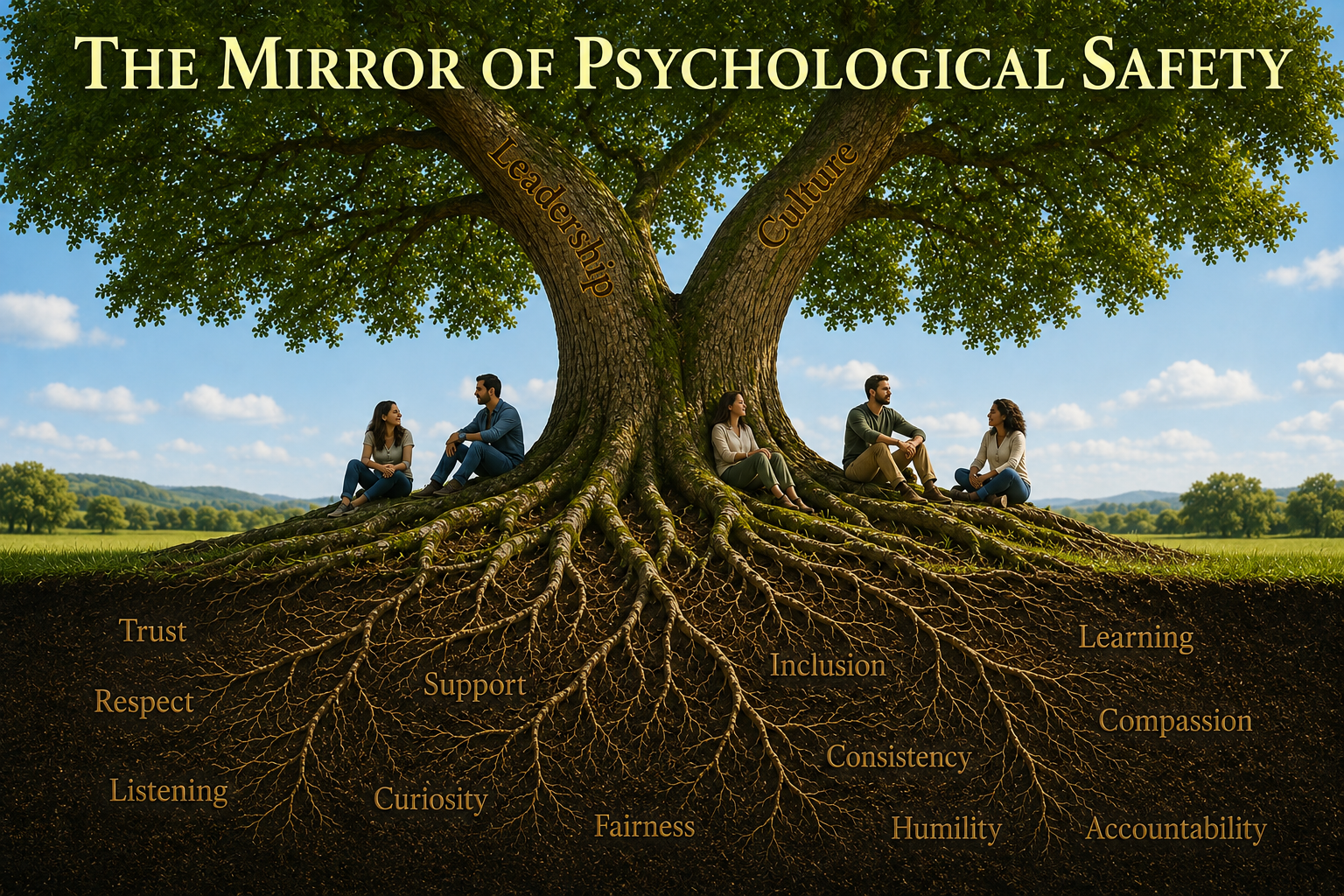
The Mirror of Psychological Safety
What people are willing to say depends upon how safe they feel saying it.
A quiet meeting doesn't necessarily mean everyone agrees. No questions doesn't necessarily mean everyone understands. No challenge doesn't necessarily mean there is nothing to challenge.
Psychological safety creates space for people to ask questions, share ideas, challenge assumptions, acknowledge mistakes and admit when they don't know something. It doesn't mean avoiding difficult conversations, disagreement or accountability. It means creating an environment where people can engage without fear of embarrassment, blame or negative consequences for speaking openly.
The Mirror of Psychological Safety explores how leadership behaviours and everyday interactions can strengthen or undermine that environment. Through practical discussion, reflection and powerful visual metaphors, participants consider what encourages people to speak, what might cause them to remain silent and how their own behaviour can influence that choice.
When people feel psychologically safe, collaboration, learning and problem-solving become more achievable. Teams are empowered to share different perspectives, challenge constructively, raise concerns and learn together.
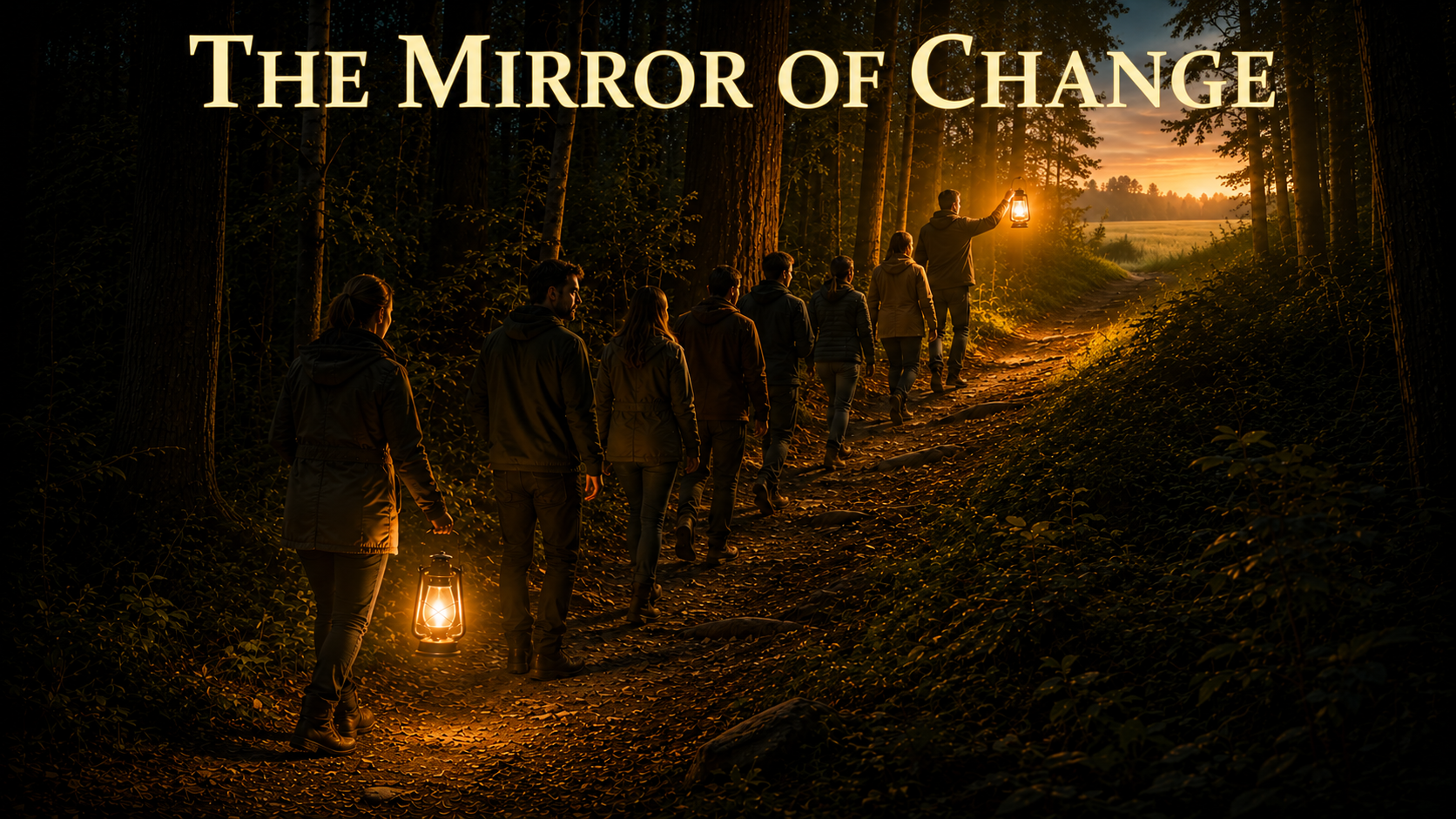
The Mirror of Change
Successful change begins with people, not processes.
People experience change differently. What appears to be resistance may reflect uncertainty, previous experience, concerns that haven't been heard or consequences that others haven't considered.
The Mirror of Change explores the emotional and practical impact of change and how leadership behaviour can influence the way people experience it. Participants consider different responses to change, question assumptions about resistance and explore how listening, communication and involvement can help them understand and respond to uncertainty.
Rather than focusing on how to overcome resistance or secure compliance, participants are encouraged to become curious about what different responses might be telling them. By creating opportunities for questions, contribution and discussion about what the change may mean, leaders can develop a more informed understanding of those affected by it.
This can enable leaders to communicate with greater clarity, respond with empathy and make more considered decisions as change progresses — creating conditions in which people are better able to understand why change is happening and what it may mean for them.
That understanding can support greater involvement, bring potential challenges to light earlier and help organisations make more informed decisions throughout the change process, enabling them to respond more effectively as the change develops.
Beyond the Workshop
Because meaningful development takes more than a single day.
Eponathelia's approach begins before the workshop, with an opportunity to explore participants' existing perspectives, behaviours and development intentions. Where appropriate, we also consider the objectives of the commissioning organisation.
Throughout the workshop, participants are encouraged to reflect upon their experiences, challenge assumptions and consider how their actions influence others.
Each participant receives a Leadership Reflection Journal to support continued awareness and reflection in their everyday leadership.
30-Day Pulse Review
Thirty days after the workshop, participants independently reflect upon what they have noticed, what they have put into practice and what challenges they have encountered.
90-Day Leadership Impact Review
At ninety days, participants revisit their earlier assessments and reflections, considering how their thinking, behaviours and decisions have developed, what has influenced those changes and where further attention might be needed.
We recognise that development is not always reflected in increasing scores. Greater self-awareness can sometimes lead participants to assess themselves more critically as they begin to recognise behaviours or assumptions they had previously overlooked.
By considering the explanations behind participants' assessments, rather than relying solely upon numerical scores, we seek to understand the experiences and circumstances influencing their development.
The intention is not simply to measure progress, but to understand it.
How The Mirror Suite Can Work For Your Organisation
The Mirror Suite can be delivered as a complete leadership development journey or through individual workshops, depending on the needs of your organisation and its leaders.
Instead of beginning with a predetermined solution, we start by understanding what you are noticing about yourself, or within your organisation, what you would like to explore and where you would like to see change.
From there, we can determine together which elements of The Mirror Suite are most relevant.
Because lasting leadership doesn't begin with knowing more.
It begins with seeing more clearly.